Syngenta’s Camilla Corsi receives the ACS International Award for Research in Agrochemicals, recognizing her leadership in crop protection innovation and R&D.

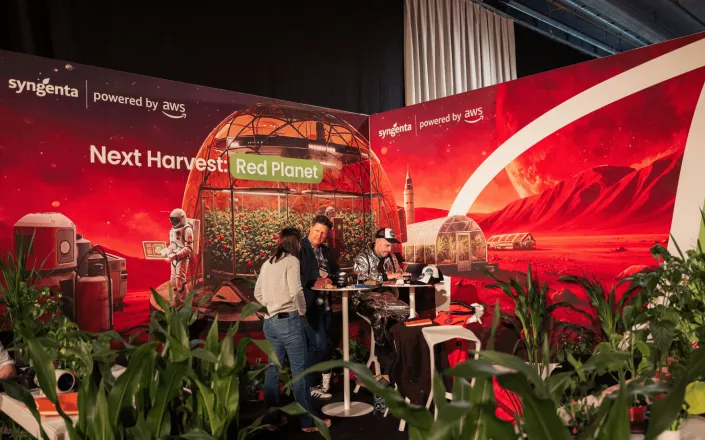
Imagine actually stepping foot on Mars. Picture it: the scorched soil underfoot, rocks dotted across sunset-glazed dust. The air is too thin to breathe. And it’s unfathomably cold. The temperature can drop as low as -153 degrees Celsius - a number we can’t even understand really, other than it’s worse than the harshest bone-cracking cold we can think of.
Here, there are storms bigger than anything we’ve ever seen on Earth. Twisters the size of entire continents tear across the planet at 100mph.
The Red Planet is endless, empty, and barren. Yet we’re setting course for this alien world – and soon. NASA wants to send humans there within the decade.
So, when we go further than the ends of the Earth, beyond what any human has ever endured, more than 240 million miles away and land on Mars, what are we going to eat? How can anything grow in a frozen desert?
That was the problem posed to a group of ambitious students at Europe’s largest hackathon this month. And they had 36 hours to solve it.
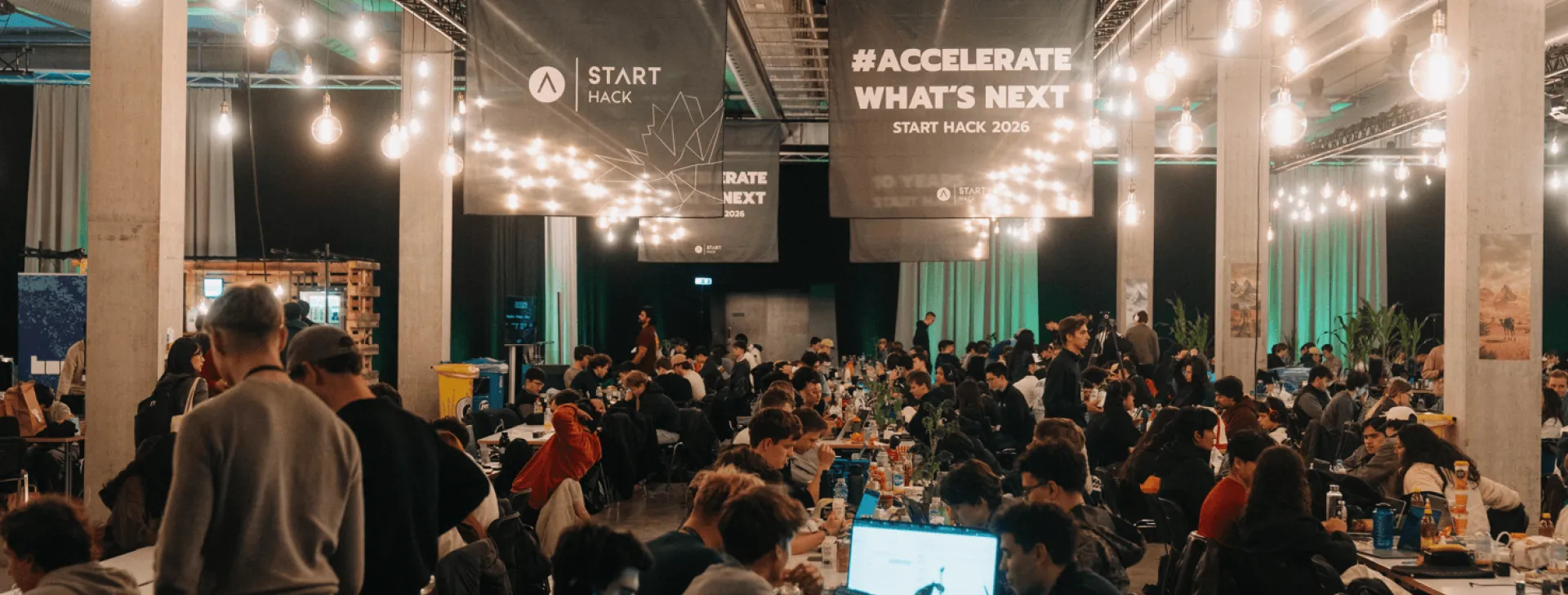
It was in the Swiss city of St Gallen that the challenge was posed to about 100 bright young minds at the recent STARThack. For three days each year, this city becomes a hub of entrepreneurial hacking, hosting global powerhouses including Amazon Web Services (AWS), Chain IQ, and, of course, Syngenta.
The aim: to bring together passionate youngsters and leading tech talents to code, compete, and create clever solutions to our biggest challenges, in a race against time.
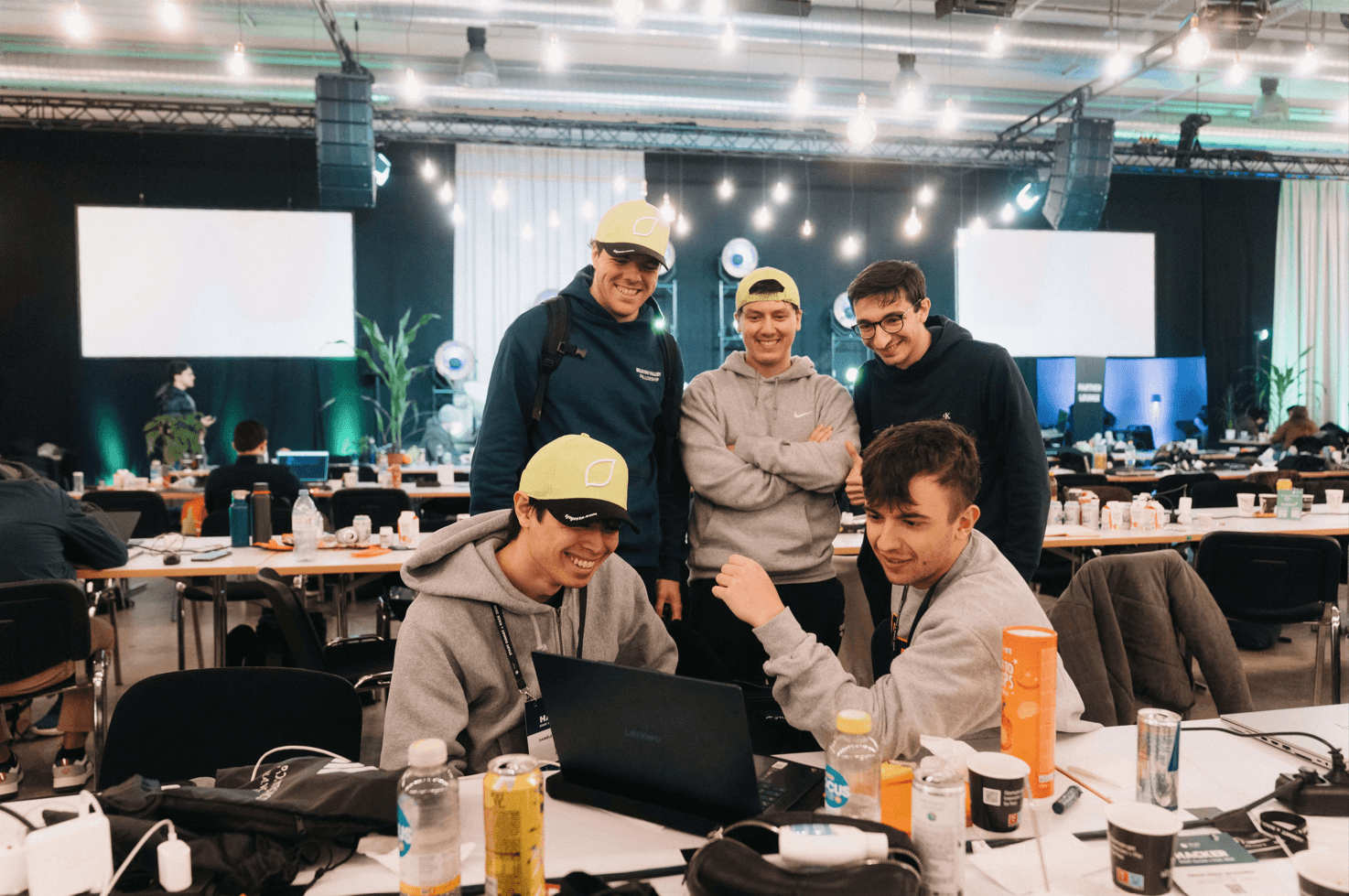
More than 600 students take part in St Gallen's annual STARThack.
Capturing the energy of the event, Marco Issenmann, Syngenta’s Head of Digital Marketing, says: “You get a lot of clever students together for just a few days, and ask them to solve some very tricky problems they've never seen before. It's like a creativity challenge coupled with problem solving under phenomenally tight time constraints.”
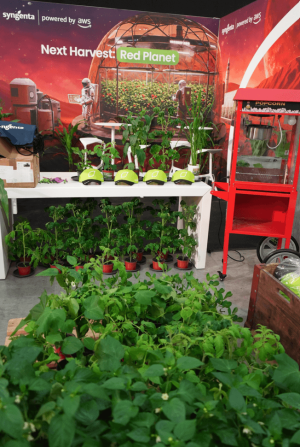
It was agritech leader Syngenta’s third year sponsoring the event and its first teaming up with technology giant AWS, combining powerful cloud infrastructure with deep agronomic experience.
The pair raised the bar with a moonshot mission, tasking the competitors to design an autonomous AI agent that could manage a Martian greenhouse and feed the next generation of space pioneers. All in just 36 hours.
Although the challenge seems to be straight out of science fiction, it’s rooted in real-world ambition, supercharged by the fast-evolving capabilities of AI.
Tech giant Nvidia recently unveiled its latest suite of open-source Al weather models that can forecast accurate global weather outlooks faster than traditional, time-consuming weather simulations. Meanwhile, ambitious astronomers are already planning the logistics of our lives on Mars, using Anthropic's Claude to chart AI-devised routes in half the time that it would take human engineers to do.
As Marco explains, the speed and accuracy of these AI tools are clearing information bottlenecks that until now, have held us back.
“AI is helping to solve problems that were previously limited by human time, not intelligence. Scientists already know how to plan rover (or GPS tractor) routes, forecast cosmic (or Earth-based) storms, and optimize space (or field) resource management. Irrespective of Mars or Earth: What’s happening now is that AI enables us to process vast amounts of data, at incredible speed, and generate completely new insights.”
Armed with these technology capabilities – and copious amounts of caffeine - what could a group of young, passionate creators achieve over 36 hours of sleepless, adrenaline-fueled hacking? The sky wasn’t the limit, the ends of the solar system itself were.
Fueled by snatches of sleep on the bean bags dotted around the event venue, the hackers raced against the clock – and each other - until their time was up, before presenting their solutions to a panel of judges.
In the end, it was a clever scientific simulation that secured ‘The Good Boys’ victory over the 25 other teams. Keenly aware of the challenges Martian farmers would face, the team developed a model that accounted for the hostile conditions on the alien planet and could then make better decisions to grow healthy crops.
While the challenge itself was exciting, team member Lionel Ding explained that it was the thinking that was needed to solve Syngenta’s problem that motivated the group to compete. “It was not just about building something – there was a lot of creativity involved in thinking and finding the solutions.”
And it’s exactly that attitude that is fueling scientific breakthroughs on and off the field in agriculture – Earthside or otherwise. As Marco says: “I've been amazed at the speed and quality of software output the teams have come up this year. The capabilities of AI take the work to a whole new level. These technologies, coupled with the innovative spirit that will one day get us to Mars, and help us to sustain life there, are exactly what we need to utilize today, to feed an ever-growing population on Earth.”
Stay informed
Receive Syngenta Group press releases directly per email