
“You’ve beaten me into submission!” the moderator said and then laughed along with the audience. “We’ll talk about AI.”
So went the lively on-stage conversation as Syngenta executive Alexandra Brand discussed the company’s agricultural innovation. The setting was Economist Impact’s 5th Annual U.S. Sustainability Summit, held recently in New York City.
Image
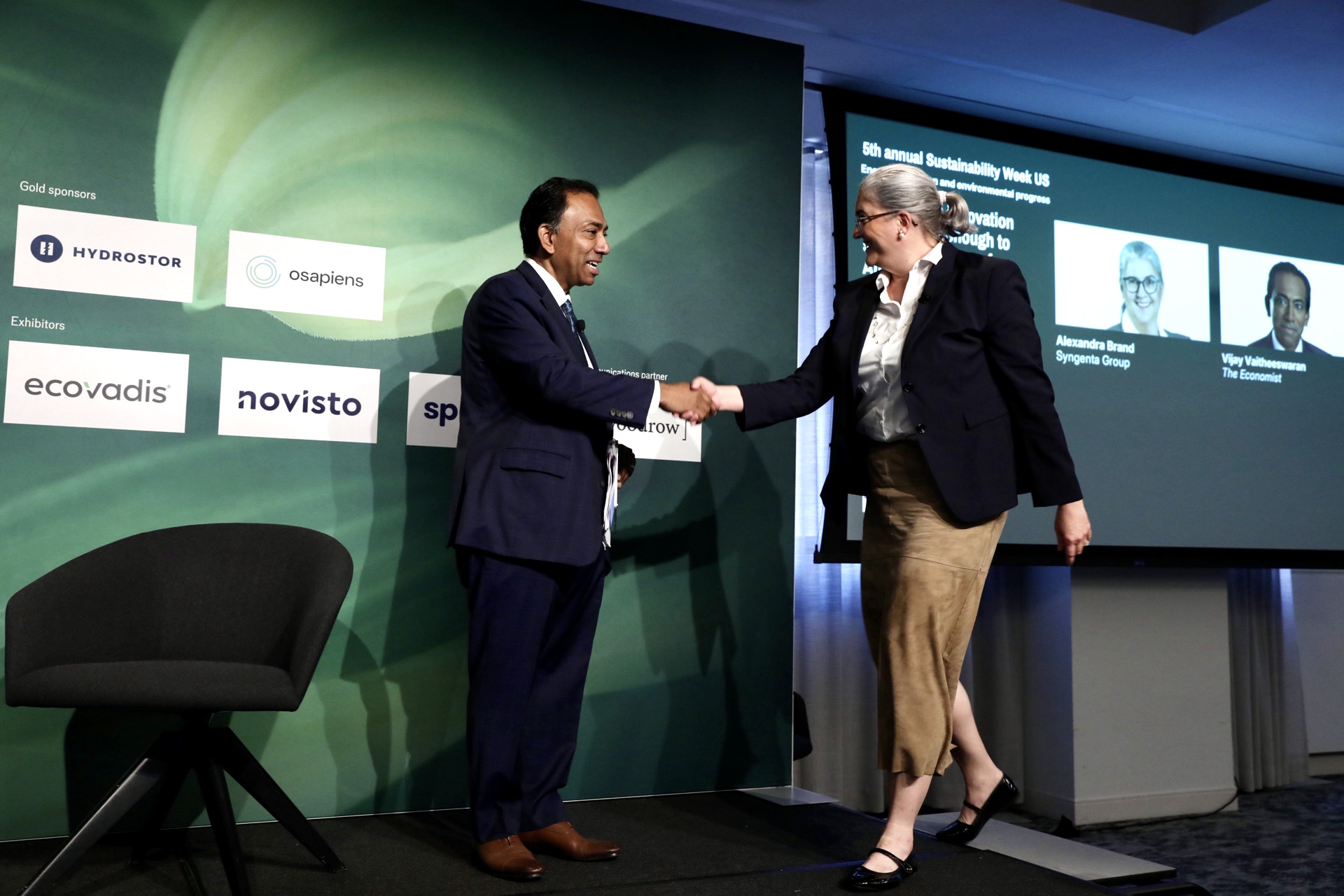
Syngenta's Alexandra Brand joined The Economist's Vijay Vaitheeswaran for a conversation on innovation in agriculture.
Brand asserted that AI (artificial intelligence) must take center stage if innovation is to move fast enough to secure the future of U.S. agriculture.
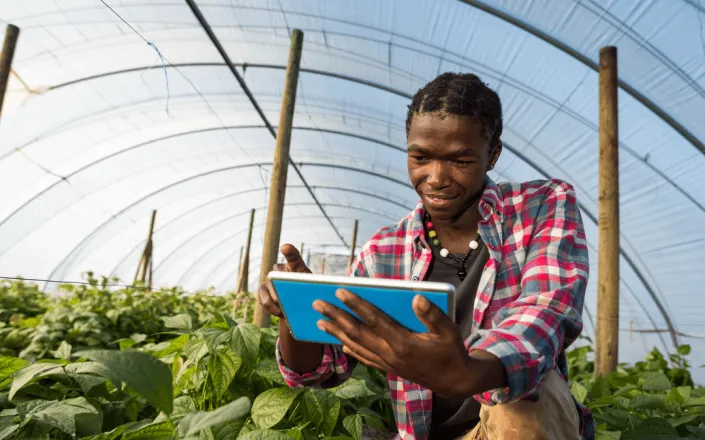
“When farmers input the data about their fields, the soil, the crops they grow, into their farm management system, we augment that with many layers of different satellite data,” Brand told the moderator, Vijay Vaitheeswaran, The Economist’s Global Energy and Climate Innovation Editor.
That information, combined with data about weather patterns and other variables related to disease and pests, enables Syngenta to give farmers “very concrete advice,” said Brand, Syngenta’s EVP of Sustainability, Corporate Affairs and Transformation. “And the AI algorithms are good enough to really be precise and not have the farmer wake up three days later and say, ‘Hey, wait a minute, that's all completely wrong!’”

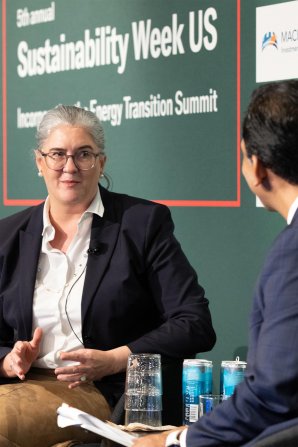
As Vaitheeswaran continued the animated conversation, Brand responded in kind, before a standing-room-only crowd of several hundred people. The conference attendees — numbering 432 in all, a record for the event — were sustainability advocates in fields that also included energy conservation and environmental responsibility.
“Sustainable” applies to business, too
The conference was no mere airing of the issues surrounding sustainability. It provided practical, business-minded advice about how companies and organizations can pursue environmentally responsible goals in ways that ensure the concepts of “sustainability” and “resilience” also apply to enduring, profitable financial models.
“Our purpose with all of these events that we run is helping businesses become sustainable faster,” Harry Chapman, Economist Impact’s Head of Sustainability Events, said in an interview. “It's really high-quality content that isn't greenwashing, that provides people with ideas they can take back to their businesses and implement.”
Certainly in Syngenta’s case the moderator, Vaitheeswaran, held Brand’s feet to the financial fire. But she effectively made Syngenta’s future-forward case about a set of sustainability methods known as regenerative agriculture.
“Now, correct me if I'm wrong,’’ Vaitheeswaran said. “I'm not an expert in agriculture. But regenerative — I've seen studies that suggest in the long term, regenerative agriculture uses 60 percent less pesticides. It seems counter to you how you make your money. Is there a tension between regenerative approaches and your conventional, historic business model?”
“No,” Brand replied. “There’s no tension, because we're an innovative company. We constantly bring new products to the market. And a few years ago we changed the design criteria for our R&D pipeline to include regenerative principles. We’ve put AI into the crop management program for better stewardship of the regenerative practices farmers are adopting.”
Chapman, who is British, said he had come to the New York event wondering whether political headwinds against sustainability and clean energy might make panelists and attendees hesitant to speak candidly. Instead, he said he came away energized that many companies intend to lead the sustainability push — because they recognize it’s not only good for the environment but good for business.
“We've moved away from people talking quite broadly about this topic,’’ he said, “to very actionable ideas and very actionable insights, and to talking about case studies and what they've actually done and what's worked and what hasn't.”
When one of the speakers, David Turk, a former Deputy Secretary at the U.S. Department of Energy, issued a call to action about sustainability — “Companies need to speak up” — he drew hearty applause.
Leading the way
Alexandra Brand made clear that Syngenta intends to help lead the farming industry into a sustainable future through AI-driven regenerative agriculture.
Vaitheeswaran, still gleefully playing devil’s advocate, asked her: “If regeneration is such a good concept, and there's reason to think it might be, why is it not getting more widespread? What holds farmers back?”
“It's a much, much more complex way of farming,” Brand replied, “because you have to deal with way more parameters. That's why having that data-based science is really important.”
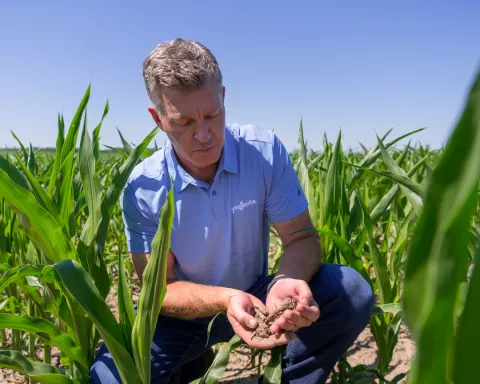
She noted that when some U.S. farmers began embracing regenerative agriculture 50 years ago, it was in many ways embracing “ancient wisdom” about best practices. But now, “science kicks in,” and farmers who use the data-based regenerative methods are beginning to see the benefits.
“Farmers do believe farmers,” she said. “So the more farmers join that movement and that practice, the more it will scale.”