How Syngenta is turning partnerships with Big Tech firms into field-level decisions, and why the hard work happens after the technology is built.
San Francisco has long been the place where the tech community congregates to shape the future. In mid-March, over a few days of an unseasonably warm spring, the city hosted a different kind of conversation.
The World Agri-Tech Innovation Summit drew more than 2,500 agribusiness executives, tech founders, investors, and startup teams. The conversation this time was less about building new tools than about making existing ones work better.
Farmers have been collecting data long before anyone used that word for it. Yield numbers scribbled across seasons, rainfall patterns logged in notebooks, the gut sense that a particular plot behaves differently in a wet spring. Most of it never made it into a system.
What's changed today isn't the amount of information available. It's that the infrastructure to do something with it, at scale, finally exists. The question is how those tools travel from the cloud to the field.
Feroz Sheikh, Syngenta's Chief Information and Digital Officer, had an answer to that question when he joined a panel with other agtech leaders on the first day.
"Agentic AI is accelerating the process of combining science data and agronomic advice," he said. "But technology is only as valuable as the decision it enables. Our focus is on the farmer making a better call, not on the algorithm making an impressive one.”
Image
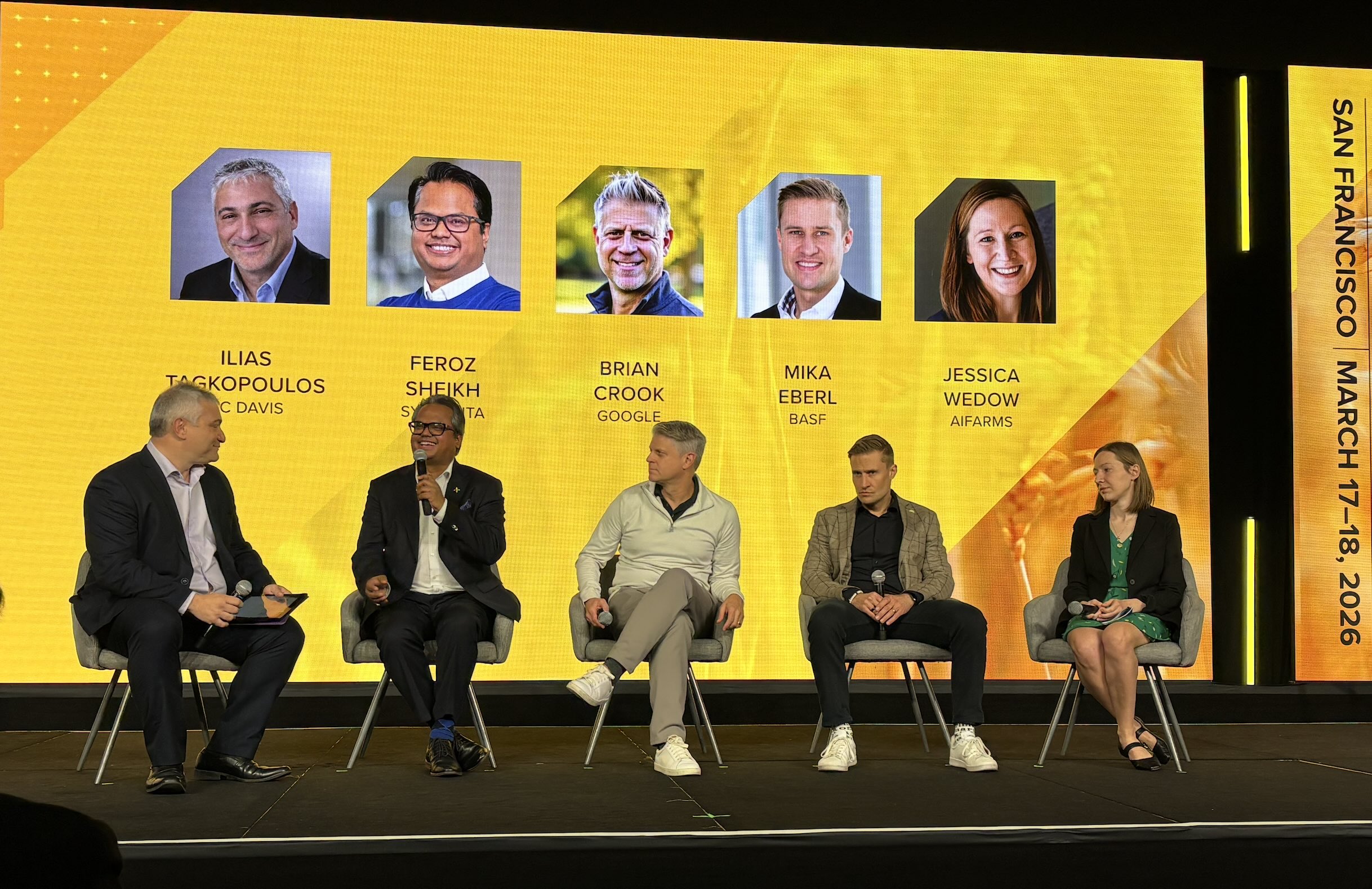
Feroz Sheikh at the World Agri-Tech Innovation Summit in San Francisco, talking about how AI experiments are being translated into real-world value in agriculture.
Image
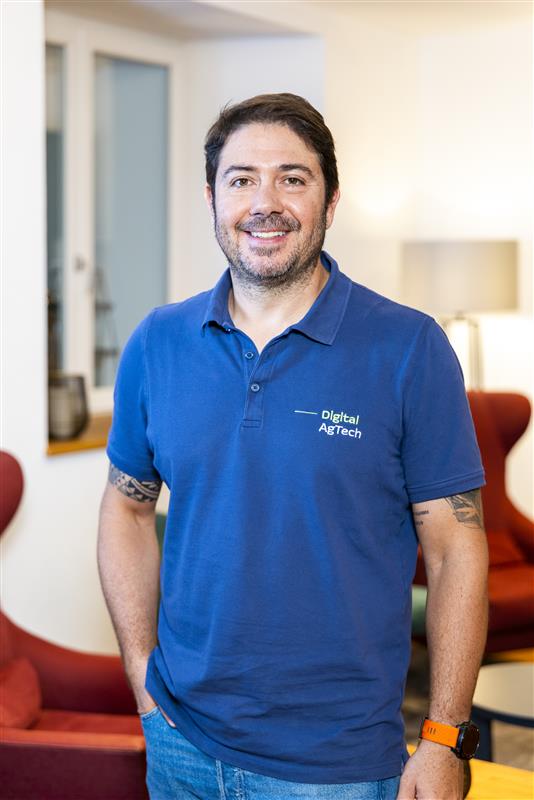
Andre Piza, Head of Digital Agtech, Syngenta
For a long time, farm management meant cobbling together tools that were never really designed for the job. Planting schedules lived in spreadsheets. Soil observations piled up in notebooks over the years. A pest mid-cycle meant scrambling. A bad season delivered lessons that arrived twelve months too late to matter.
A 2024 McKinsey survey of about 4,500 farmers across nine countries found larger farms adopt agtech at significantly higher rates than smaller ones. The technology existed. The conditions for its broad use did not.
"Before Cropwise, farmers were just reacting," said Andre Piza, Syngenta's Global Head of Digital AgTech. "We can now analyze previous years, the weather, the soil, and give a farmer a forecast rather than a reaction. That shift is one of the most consequential things digital agriculture can offer."
Cropwise launched in autumn of 2020 with a single feature and has since expanded to include tools for crop protection, farm operations, financial planning, sustainability tracking, and spray management. Cropwise AI draws on more than 20 years of weather history, detailed soil data, and over 80,000 observations on crop growth stages, with yield improvements of up to five percent projected for seed recommendations, with expansion into crop protection already underway. What distinguishes the output is specificity.
"The AI models are not making textbook agronomy recommendations," Feroz said at the Summit. "They are making them in the context of our offerings such as seed treatment, crop protection, and so on. That is what makes them actionable.”
Syngenta works with AWS, Google, and Microsoft, selecting each for specific purposes rather than adopting a single-provider approach. "We decide what fits better for what purpose," Andre said. "Then our teams, agronomists and engineers, working together, make it relevant to the field."
Around 500 people across hubs in the US, India, Brazil, and other locations work across Syngenta's technology teams. They blend engineering, data science, and agronomy, because in agricultural intelligence, the most important capability is not model sophistication but agronomic relevance. What makes the platform architecturally distinctive is how its layers interact.
"One agent can ask another agent," Feroz said at the Summit. "Hardware, software, and services combine to create an ecosystem. That becomes a big differentiator."
Retailers, input companies, and startups are solving distribution problems they previously could not see. Fintech companies have been among the first to plug into the open platform. This is part of Syngenta’s conviction that agricultural transformation can’t be driven by any single player, but by an ecosystem whose parts work with each other and have access to the same intelligence.
In November 2025, Syngenta launched Cropwise Open Platform that allows third-party developers worldwide through standardized application programming interfaces, or APIs. These are software connections that allow digital systems to share data and communicate securely with each other. The move sought to address the lack of technological access for smallholder farmers, a major barrier to adoption of agricultural innovation.
Research from IPSOS, conducted in partnership with Syngenta, found that trust, data control, and proof of local results are the most powerful drivers of adoption among farmers, more than features or price points.
"When a farmer receives advice in their own language on Cropwise, using terms from their own agronomic context, the trust changes," Andre said. "That trust is what converts a recommendation into an action. Without it, the most sophisticated model in the world sits unused."
The best innovations for a smallholder in sub-Saharan Africa or a grain producer in Romania may come from developers closer to those contexts. By opening its APIs, Syngenta gives those developers access to its agronomic infrastructure and worldwide network. A weather tracking tool built by an independent developer, for instance, can reach farmers anywhere in the world. Each grower retains control of their own data.
Cropwise currently covers nearly 76 million hectares across more than 30 countries, independently audited by KPMG, with Brazil leading regional coverage, followed by North America, the EU, AMEA, and Latin America.
Last year brought strong growth in South America, India, and Asia-Pacific. Speaking at the World Agri-tech Innovation Summit, Feroz mentioned the growth drivers.
"People were waiting for the technology to be proven," he said. "In India, government support and philanthropies have helped bring Cropwise Grower to smallholder farmers who could not otherwise access it. For those farmers, this is a leapfrog moment."
Scale also creates capabilities that individual tools cannot replicate. "With large coverage, in Brazil for example, we can see a disease progressing across a region and warn downstream farmers before it reaches them," Feroz said. "That is only possible at scale."
The question Syngenta has spent five years answering is not what AI can do in agriculture. It’s what it takes to make the possible useful, for a specific farmer, on a specific field, at the moment a decision needs to be made.
Image
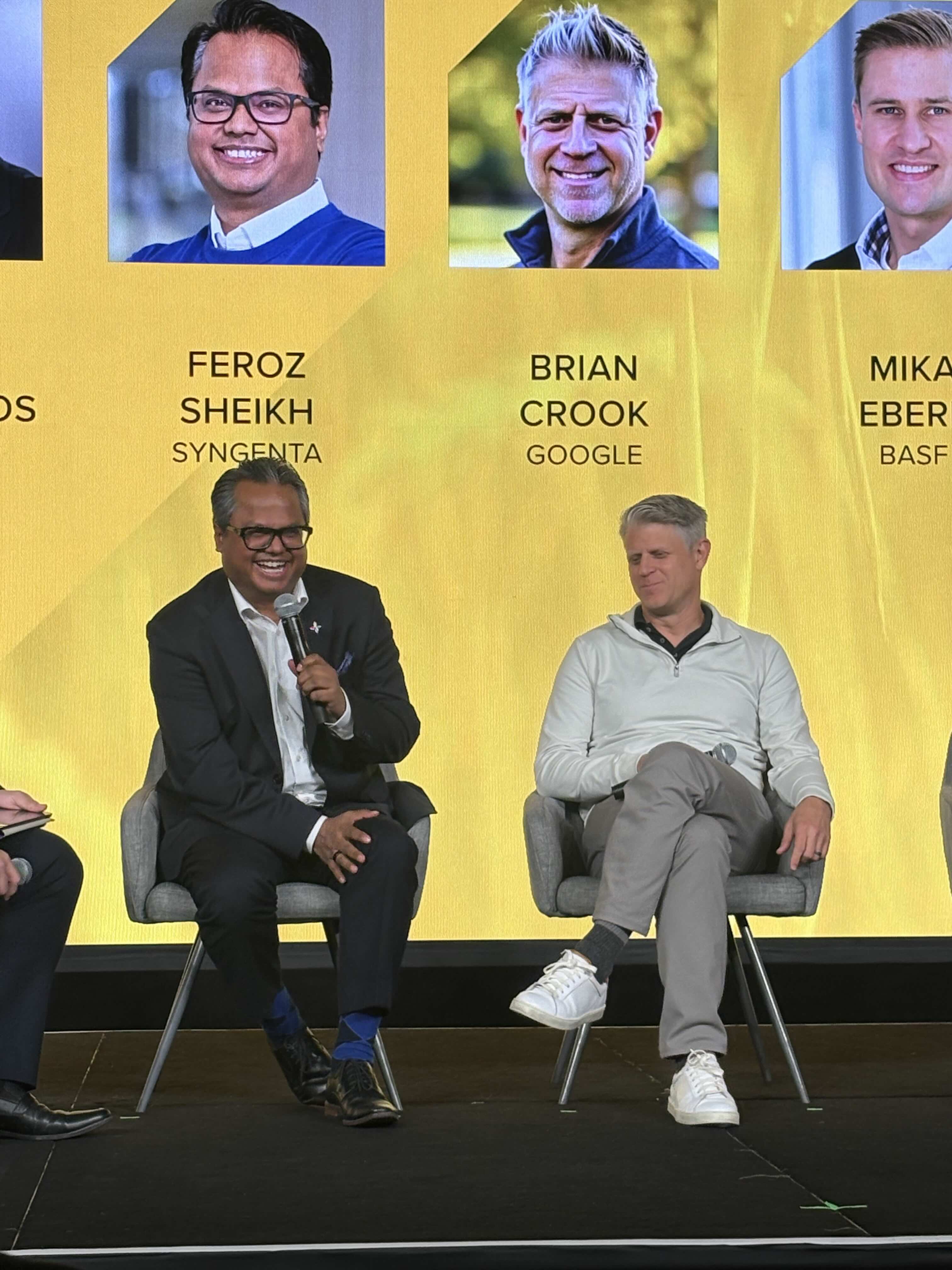
"At Syngenta, we don't replace the farmer's knowledge," Feroz said at the Summit. "We sharpen it. The question we ask is whether a feature helps a farmer make a better agronomic decision. If it doesn't, it doesn't belong on the platform."
More from Syngenta Group